
Formal Report on Beach Clean-Up Drive
To: The Principal, Greenfield International School
From: Aarav Mehta, Grade 9
Date: 26 July 2026
Subject: Report on the Beach Clean-Up Drive in Mumbai
Introduction
This report presents an account of the beach clean-up drive organised for students of Grades 8 and 9 at Juhu Beach, Mumbai. The activity aimed to create environmental awareness, develop civic responsibility (a citizen’s duty towards society) and encourage students to protect marine life.
Activities Conducted
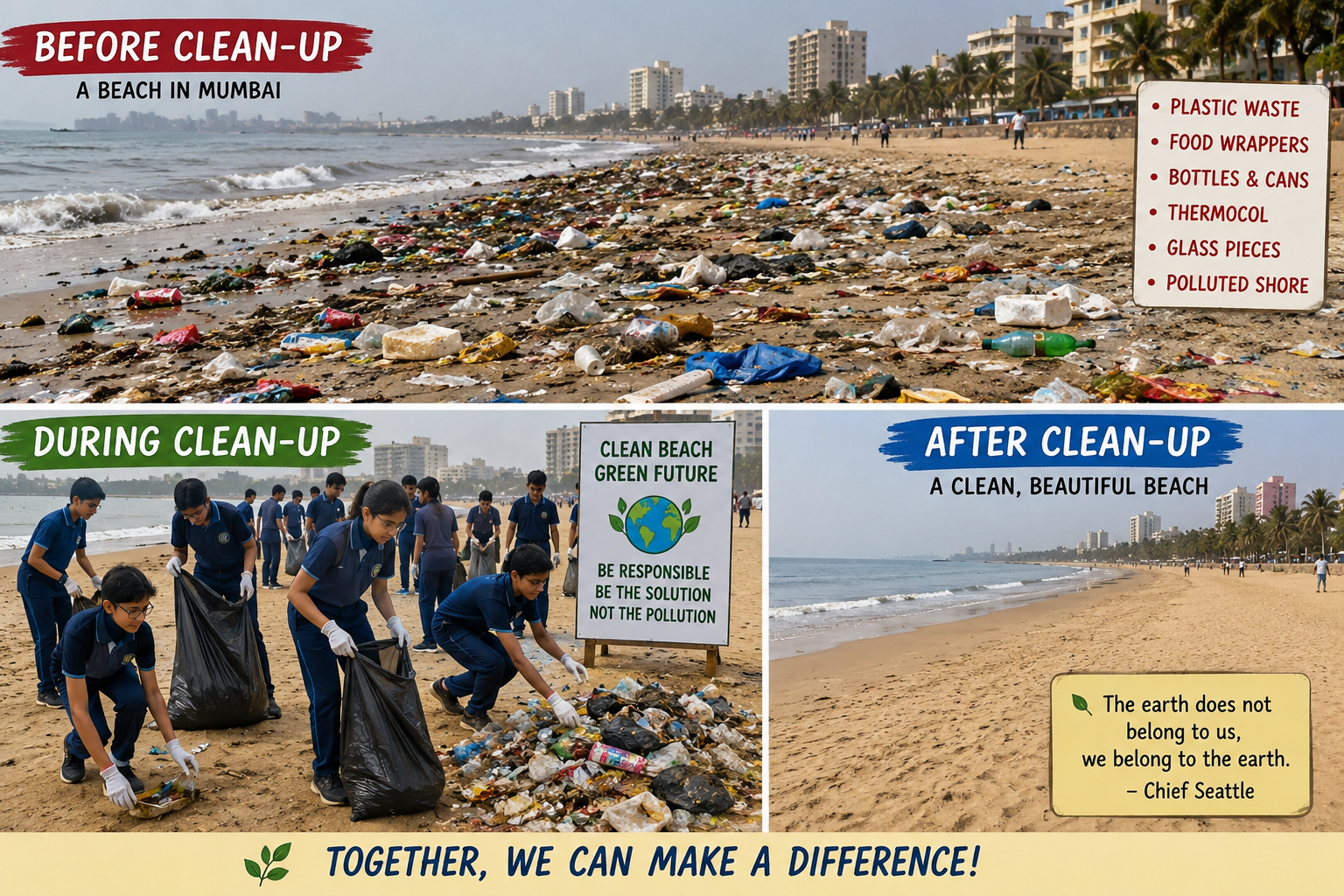
The students reached the beach at 7:30 a.m., accompanied by teachers and volunteers. Gloves, reusable garbage bags and litter pickers were distributed. Students were divided into teams and assigned different sections of the beach.
At first glance, the golden-brown sand appeared beautiful beneath the pale blue morning sky. However, plastic bottles, wrappers and discarded containers were scattered across the shore like unwanted confetti after a celebration. The sight revealed the alarming effects of careless littering.
Students worked with remarkable diligence (careful and persistent effort) and perseverance (determination despite difficulties). They collected plastic, glass, paper and other waste and separated it for appropriate disposal and recycling. Everyone was encouraged to leave no stone unturned in making the beach cleaner.
Observations and Impact
The activity demonstrated that “Actions speak louder than words.” Instead of merely discussing pollution in the classroom, students actively contributed towards solving the problem.
The azure-blue sea seemed to breathe more freely as bags of rubbish were removed from the shore. The students displayed cooperation, responsibility, compassion and discipline throughout the activity.
Mahatma Gandhi famously said, “Be the change that you wish to see in the world.” The clean-up drive reflected this message perfectly. Students realised that even a small action can create a ripple of change in society.
Recommendations
It is recommended that such drives be organised every term. Schools could also conduct awareness campaigns on reducing single-use plastic and place clearly labelled recycling bins at public events. Students should be encouraged to become stewards (responsible protectors) of the environment.
Conclusion
The beach clean-up drive was both enlightening (giving greater knowledge and understanding) and rewarding. It transformed an ordinary school outing into a valuable lesson about environmental responsibility. After all, “Many hands make light work.” When young people work together with determination, even a polluted shoreline can find its sparkle once again.